Tow — Review
Source: Roadside Attractions
Stephanie Laing’s Tow is a touching, based-on-a-true-story drama that sheds light on the realities of homelessness in America. The film is anchored by a dedicated performance from Rose Byrne, fresh off the success of last year’s If I Had Legs I’d Kick You, another film about an imperfect mother navigating a stressful situation. While Byrne and a few of the central performances bring some sincerity to the material, much of the supporting cast feels underdeveloped, with stilted performances and side characters that lack depth and nuance. Paired with a tone that often slips into cheesy sentimentality and a story that unfolds in largely predictable ways, Tow struggles to turn its powerful premise into a compelling drama.

Source: Roadside Attractions
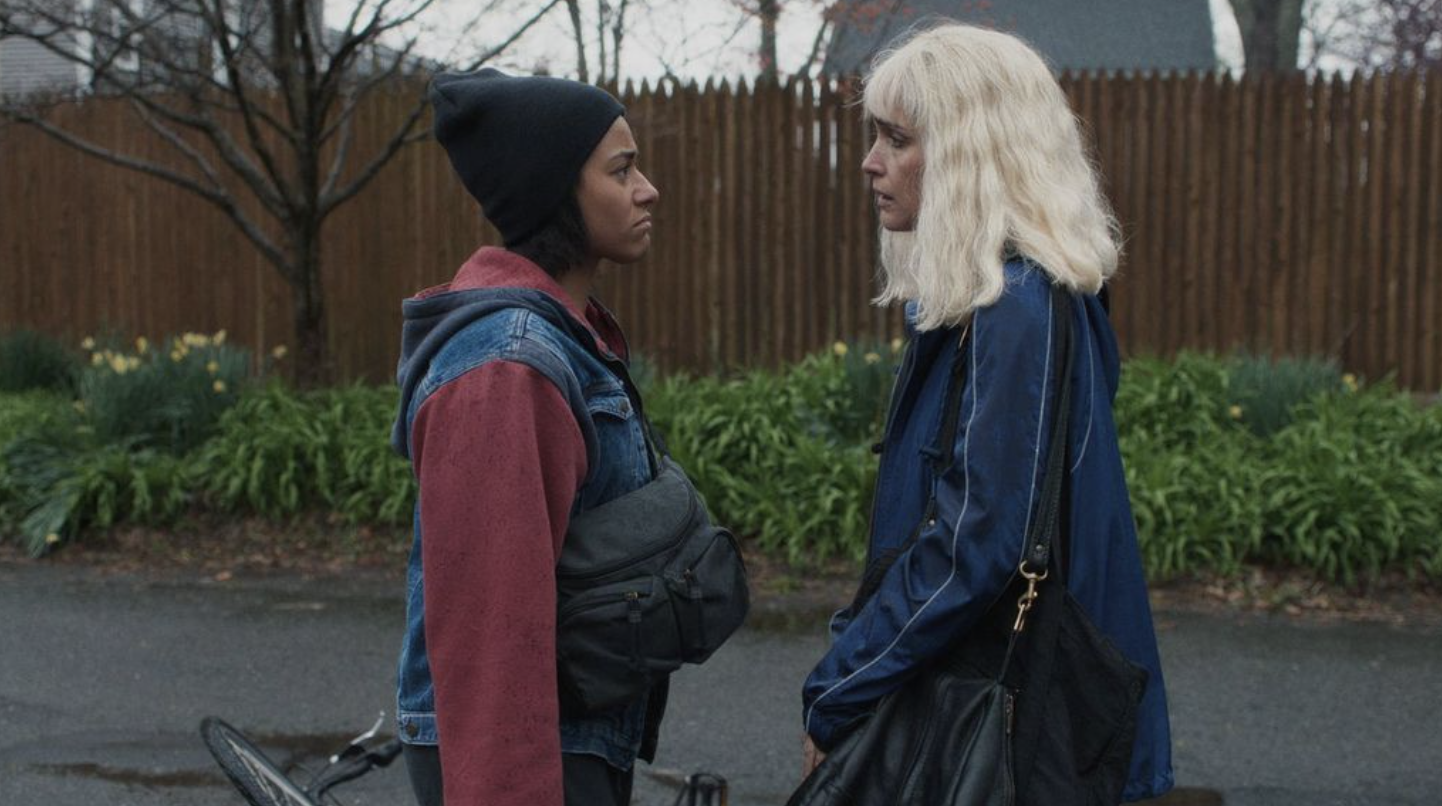
When we first meet Amanda Ogle (Rose Byrne), she’s living out of her 1991 blue Toyota Camry in Seattle while searching for work as a veterinary technician. During a job interview, it quickly becomes clear that her lack of a college degree is a major obstacle. The hair, makeup, and costume departments deserve some recognition, as Amanda’s eccentric style becomes one of the film’s most memorable visual elements—from her platinum-bleached hair to her pastel-pink outfits and matching accessories. Amanda’s daughter, Avery (Elsie Fisher), who lives in Utah, has a passion for cosplay, and Amanda promises that once she’s back on her feet financially, she’ll help fund Avery’s dream of starting a costume design business. One night, when Amanda pulls into a parking lot, the attendant tells her it’s already full for the night. She pleads that she has nowhere else to go, but the attendant reminds her, “At least you have your car,” reinforcing the notion that, however grim Amanda’s situation may be, she still has some form of shelter in her reliable Camry.
Source: Roadside Attractions
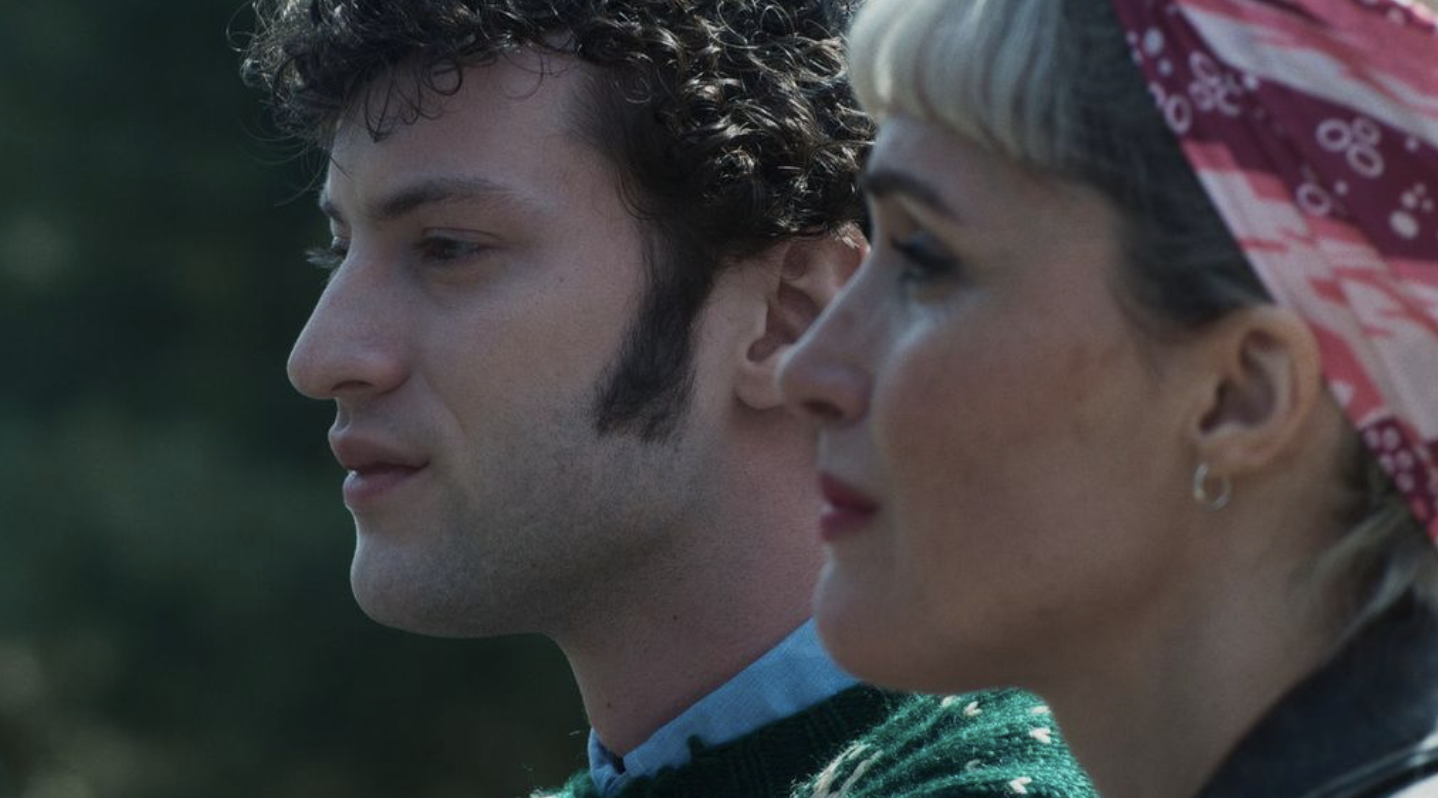
Amanda finally catches a break when she lands a job at a dog groomer, but the good news is short-lived. Returning to the parking lot, she discovers that her car—and effectively her home—has been stolen. The vehicle is quickly recovered, but when Amanda goes to the towing company to retrieve it, she’s hit with another setback: a pile of fees she must pay before they’ll release it. Thus, a legal battle ensues as Amanda desperately tries to reclaim her beloved Camry. Kevin (Dominic Sessa), a young lawyer, takes an interest in Amanda’s case, proclaiming that “people like her” are exactly why he went to law school. The phrase “people like you” is repeated throughout the film, highlighting the stigma that surrounds homelessness. Determined to fight what he sees as corporate bullying, Kevin takes on the towing company and its lawyer, Martin La Rosa (Corbin Bernsen), who can’t even be bothered to appear in court.
Source: Roadside Attractions
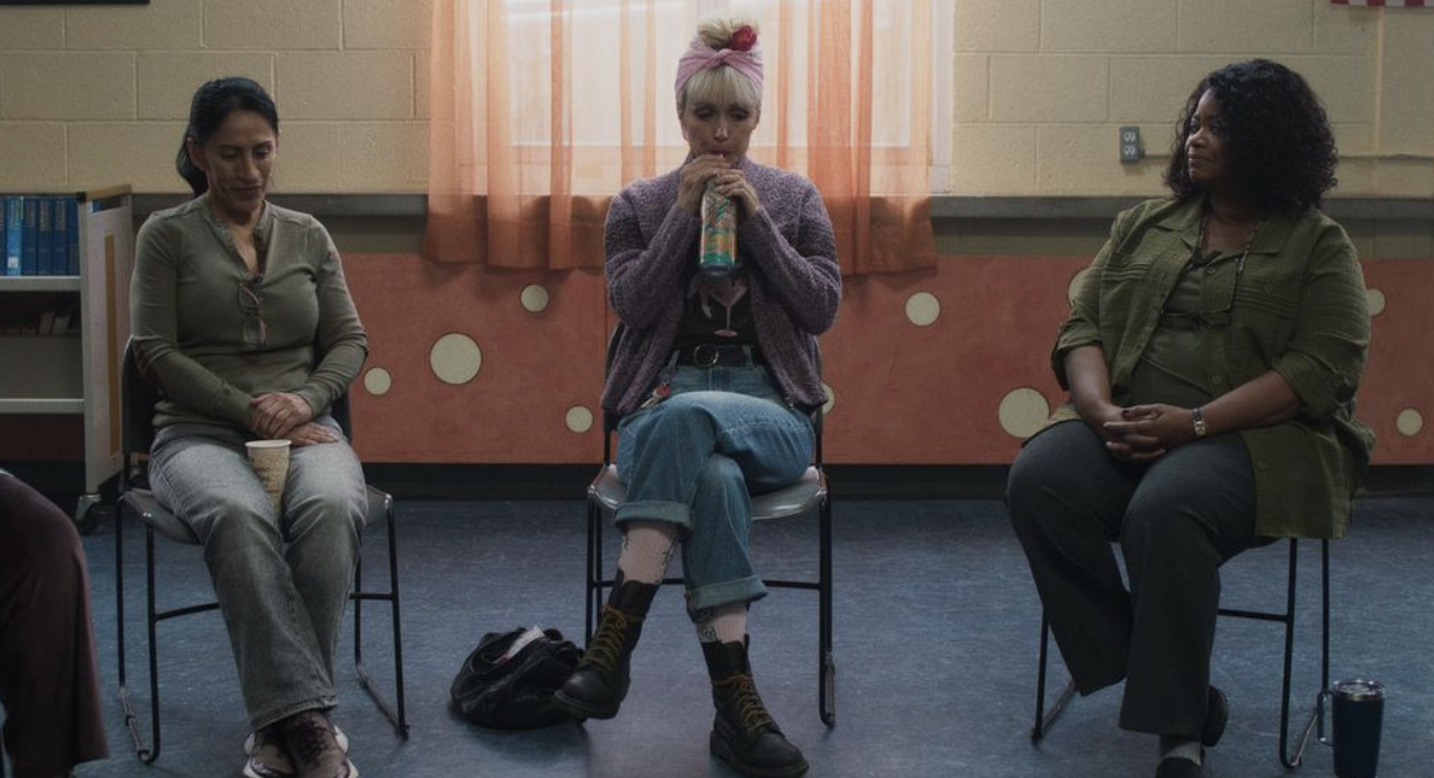
As the legal battle trudges on, Amanda finds temporary reprieve at a local homeless shelter for women, managed by Barb (Octavia Spencer). There, she encounters a variety of residents, including Denise (Ariana DeBose) and Nova (Demi Lovato). Unfortunately, these side characters feel underwritten and one-dimensional, and the lackadaisical performances certainly don’t do them any favors. If not for the stronger work of Byrne, Sessa, and Spencer, Tow would feel closer to a Lifetime movie, weighed down by predictable, saccharine storytelling.
The film’s structure also feels somewhat haphazard. On-screen text periodically reminds viewers how many days have passed, but the passage of time is also marked by holiday-themed dog portraits at the grooming salon. While these seasonal portraits make for a cute visual touch, the film’s overlapping methods of tracking time contribute to an uneven sense of pacing. The film also intermittently returns to an animated letter accompanied by narration, suggesting that Amanda is writing it herself. However, the letter's purpose isn’t made clear until the third act, making its earlier appearances feel a bit random and distracting.

Source: Roadside Attractions
Este Haim and Nathan Barr’s score is one of the film’s highlights, enhancing the emotional weight of the story without dictating how the audience should feel. Vanja Černjul’s cinematography is largely functional, capturing the events with competence while rarely drawing attention to itself. The production design effectively conveys the cramped, ephemeral spaces Amanda inhabits, particularly the lived-in interior of her Camry and the modest women’s shelter. However, the film’s editing occasionally fails to maintain momentum, contributing to the uneven pacing that surfaces throughout the story.
Tow is a timely reminder that most of us have far more in common with people like Amanda than with the wealthy business owners and lawyers who profit from systems stacked in their favor. Unfortunately, despite a strong central performance from Rose Byrne, the film is bogged down by predictable plotting, underdeveloped side characters, inconsistent supporting performances, and a tone that often veers into saccharine sentimentality. Combined with pacing that falters at times, these flaws prevent the film from fully delivering the emotional impact it aims for. Despite its drawbacks, Tow depicts homelessness with compassion and empathy, telling an uplifting tale about resilience and perseverance.
Tow will be available in theaters on March 20, 2026.