Maddie’s Secret — Review
Source: Magnolia Pictures
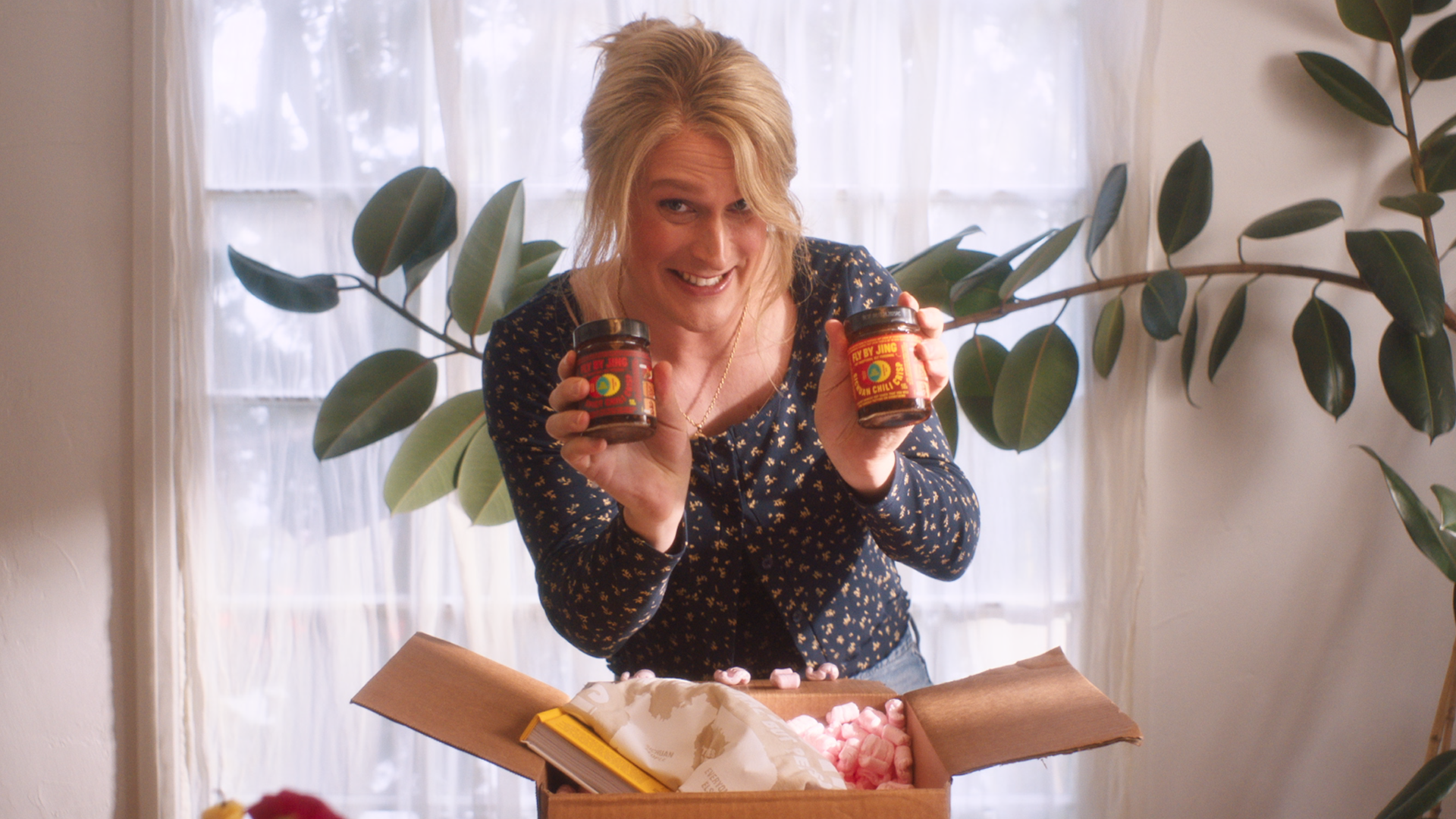
John Early’s directorial debut, Maddie’s Secret, is the type of film that, on paper, should not work. For starters, Early cast himself as the film’s female protagonist, Maddie Ralph. The movie feels like a cross between John Waters’ Female Trouble (1974), Alfred Hitchcock’s Marnie (1964), Paul Verhoeven’s Showgirls (1995), and Arthur Allan Seidelman’s made-for-TV movie Kate’s Secret (1986). In fact, one could call it a parody of Kate’s Secret and similar earnest TV movies that tackled serious topics, such as eating disorders, in an over-the-top manner that made them unintentionally comical. However, Maddie’s Secret feels more like a pastiche than a parody, affectionately borrowing from its influences rather than merely mocking them.
Maddie’s Secret also pulls off a tricky tonal balancing act. It is campy, melodramatic, and satirical, yet remains deeply sincere. What makes the film so remarkable is its ability to find humor in a story about an eating disorder without trivializing or mocking its subject matter. For all its jokes, melodrama, and absurdity, Maddie’s Secret offers one of the more thoughtful depictions of an eating disorder in recent cinema.
Source: Magnolia Pictures
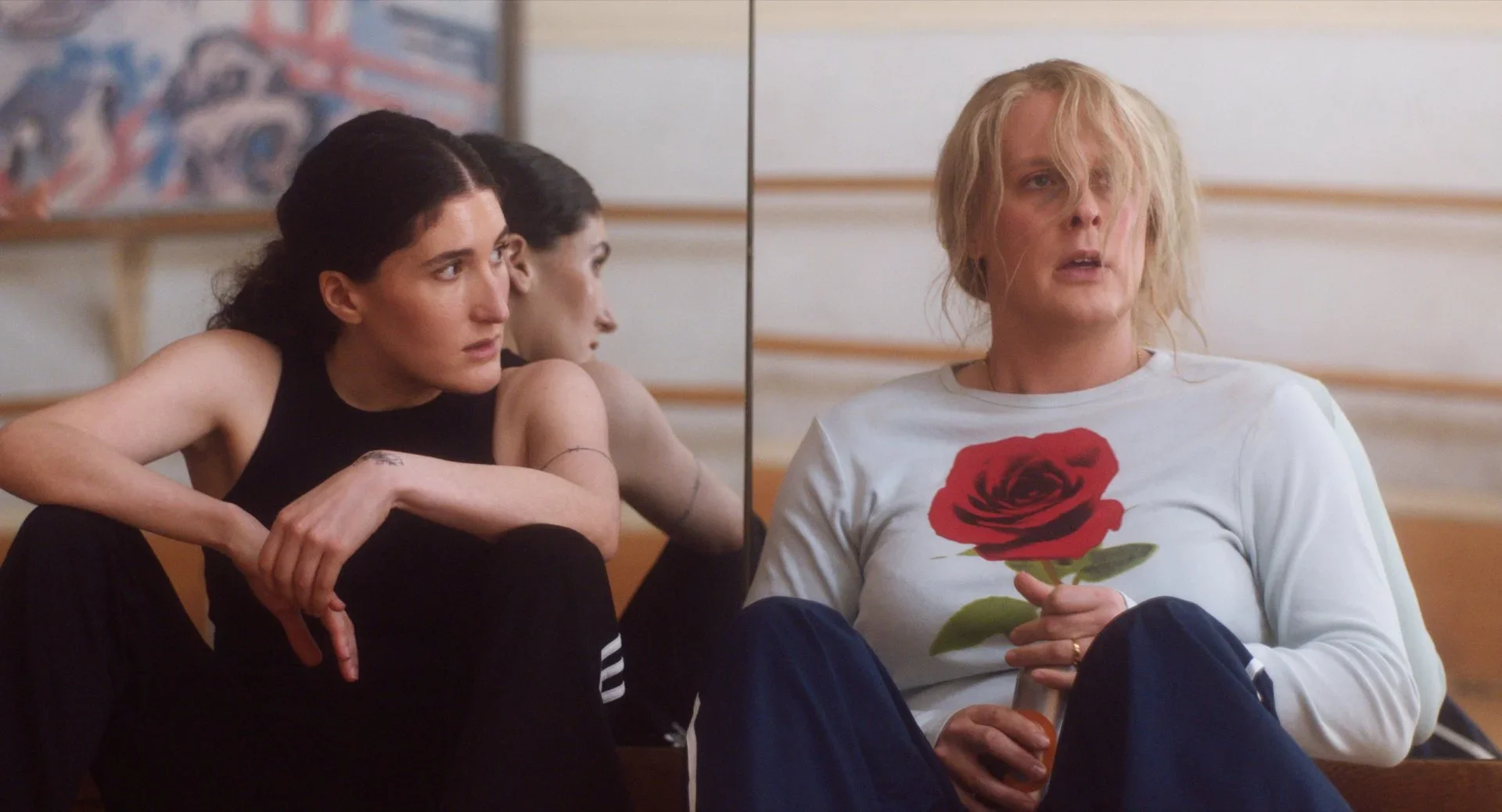
The film follows Maddie, who works as a dishwasher for the food-content streaming company Gourmaybe alongside her fiercely loyal best friend, Deena (Kate Berlant). Gourmaybe is run by producer Zach (Conner O’Malley), who is having an affair with the network’s snarky star, Emily (Claudia O’Doherty). Maddie’s life changes dramatically after her loving husband, Jake (Eric Rahill), records a video of her cooking. When the video racks up more than 600,000 views overnight, Maddie is promoted at Gourmaybe. However, the pressures of newfound fame and Emily’s relentless bullying trigger painful memories and force Maddie to confront past traumas.
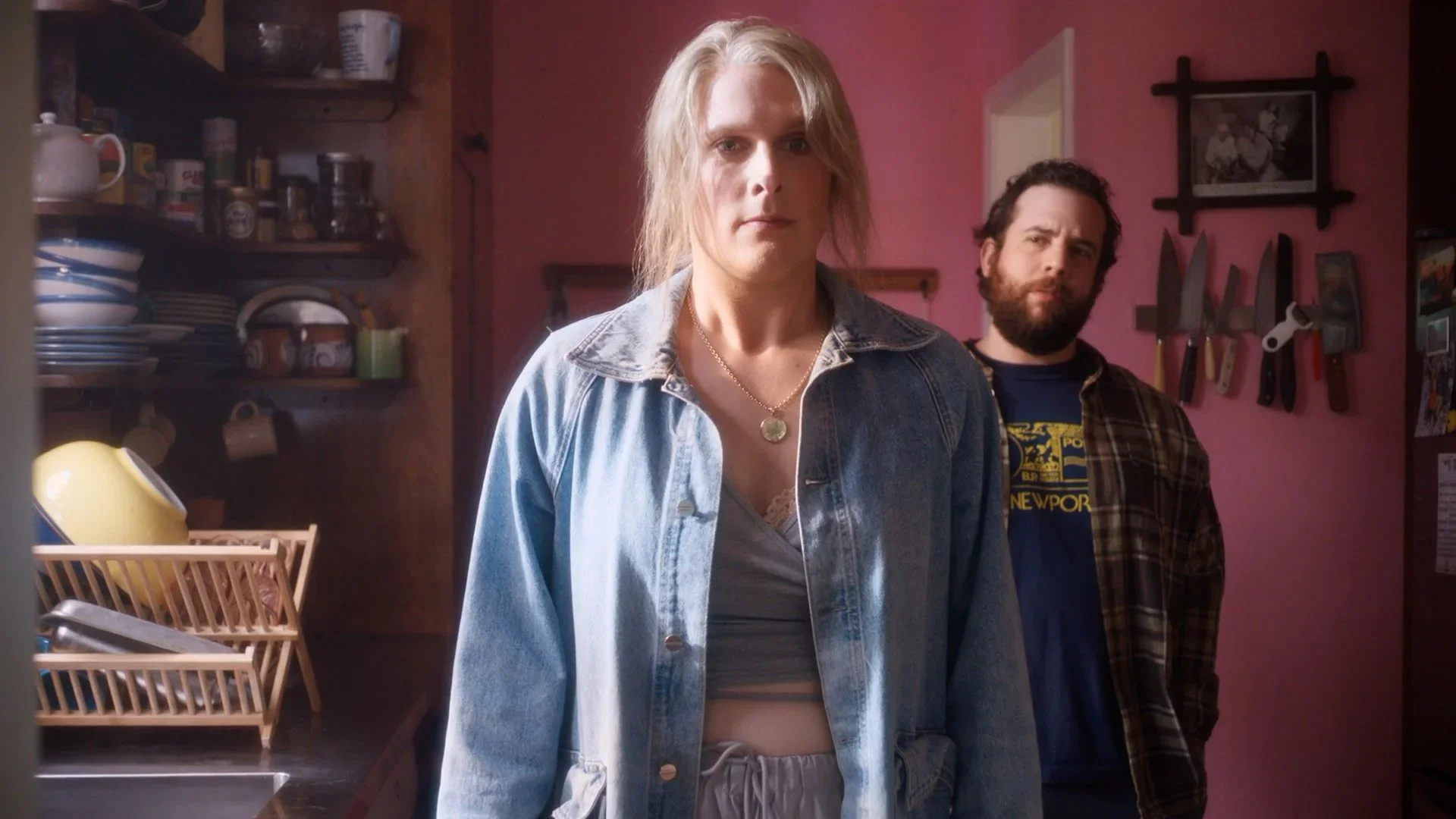
Drawing on Early’s eclectic influences, the film’s visual style merges the scrappy low-budget aesthetic of an early John Waters picture, the bright lighting and artificiality of an afterschool special, and the moody staging and blocking of a Douglas Sirk melodrama, all realized through Max Lakner’s cinematography and the film’s production design. Lighting shifts between brightly lit, almost flattened interiors and more shadowed, moodier setups, reinforcing the film’s oscillation between heightened artifice and emotional melodrama. As a result, the film’s visual language aligns with its tonal shifts.
Source: Magnolia Pictures
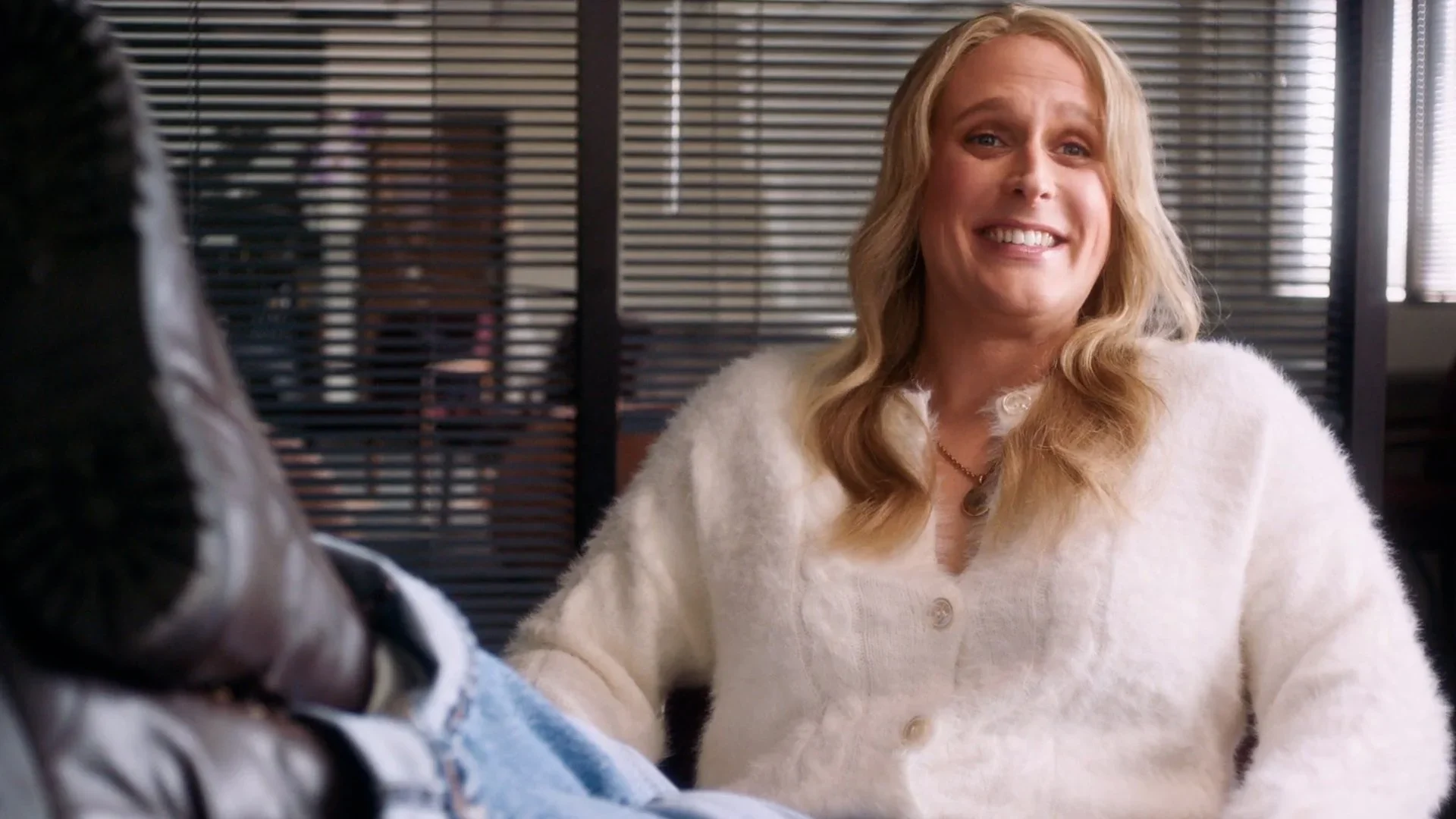
The performances are part of what makes the film so effective. The entire cast delivers extremely committed performances. Early playing the female lead seems like something that shouldn’t work, but he approaches the role with enough sincerity that it makes sense within the film’s world. In less assured hands, both the casting and performance could risk being perceived as insensitive or misogynistic, raising questions about why the role was not given to a woman. However, the casting choice also contributes to the film’s offbeat humor and shapes how the character is received. By removing the expectation of a female body on screen, the film shifts attention away from scrutinizing an actress’s appearance and instead directs it toward the character’s behavior and the social dynamics around her. In this way, it indirectly comments on the ways women’s bodies are typically read and judged on screen.
Moreover, Early’s writing and performance never feel like he is making a mockery of the character. He is not parodying femininity; he is critiquing beauty standards and the way women are constructed and judged on social media. The film’s approach suggests a deep respect and admiration for women, treating Maddie and the other female characters with empathy rather than ridicule. Maddie is not the butt of a joke, but a stylized embodiment of the ingénue figure. Early himself has described the film as a “love letter to the girls who protected me in my adolescence,” reinforcing this sense of affection. The film ultimately reads as a celebration of womanhood rather than a work that positions women as objects of critique or ridicule.
Source: Magnolia Pictures
Maddie’s Secret is the type of film that feels resistant to critique. Aspects of the work that some may perceive as flaws are intentional, as with most melodramas. It is meant to be over-the-top, exaggerated, and to have a heightened sense of emotion. The fact that it balances multiple tones means it casts a wider net and may appeal to a larger audience. Whether moviegoers love or hate those made-for-TV-style eating disorder films of the ‘80s and ‘90s, there is something for everyone to enjoy here. People who unironically love those types of movies will appreciate the film’s earnest approach, while others may find humor in the way it puts a modern spin on the style and embraces its inherent excess. The reason it feels more like pastiche than parody is that there is a tenderness to Early’s methods. He is not bashing these types of movies, but celebrating them and finding humor in them. As Susan Sontag described camp, “People who share this sensibility are not laughing at the thing they label as ‘a camp,’ they’re enjoying it. Camp is a tender feeling.” Some viewers may be turned off by the film’s ambition and find its tonal balancing act grating or confounding. However, for viewers on Early’s wavelength, Maddie’s Secret is both hilarious and heartfelt.
Maddie’s Secret marks a distinctive and fascinating directorial debut from John Early. The film succeeds thanks to how fully Early and his cast and crew commit to its unique blend of melodrama, camp, satire, and sincerity. At one point during the film, a character remarks that she believes Maddie “wants to lose control.” That line feels relevant to the film itself. Early maintains clear control over his vision while still allowing its moments of excess and emotional intensity to unfold freely. In doing so, he crafts a film that embraces melodrama and camp without losing coherence or emotional resonance, resulting in a debut that feels both bold and carefully constructed.
Maddie’s Secret is now playing in select theaters.